Addressing Water Scarcity in Morocco: Innovating for Sustainability
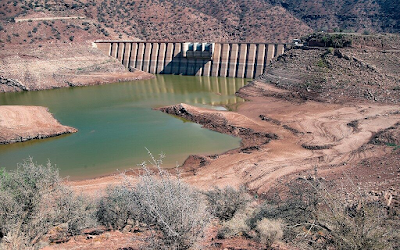
Morocco is dealing with a serious water scarcity issue right now. It's all because of climate change, more people, and some old-fashioned water habits. Imagine, each person in Morocco only gets less than 600 cubic meters of water every year - that's not much at all!
 |
| Photo taken by: unknow |
Most of the water, about 87%, goes to agriculture, which is a big deal. Even though Morocco has lots of dams (like, 150 of them), they're trying out new ideas to deal with climate change. They're using early warning systems and doing other stuff to get ready for droughts.
They have this big plan for drinking water and irrigation until 2027. It's all about dealing with climate change and making sure everyone has enough water. They're even building new desalination plants to get more water.
Using cool new technology and working with businesses and the government is super important to fix this. They're trying to use water better and save more of it. And everyone needs to be involved, not just Morocco - the whole world has to help out with this water problem.
Morocco's Green Hydrogen Gamble: Driving a Sustainable Energy Shift
 |
| Photo taken By Eleanor Butler |
Here's the latest scoop from Morocco: the government is placing a big bet on green hydrogen to drive its transition to cleaner energy. They're currently setting aside a whopping one million hectares of land just for green hydrogen projects. In the initial phase, they're making 300,000 hectares available to investors, both domestic and foreign. But what exactly is green hydrogen? It's hydrogen produced through electrolysis using renewable energy, without relying on fossil fuels. It's incredibly clean, emitting only water vapor and heat as byproducts.
The Moroccan government reports that many investors, both local and international, are showing significant interest in the project. They believe it will position Morocco as a leader in renewable energy, leveraging the country's abundant natural resources, strategic geographic location, excellent infrastructure, and skilled workforce. Despite having small oil and gas reserves, Morocco is well-equipped to harness green energy due to its plentiful solar and wind resources. Furthermore, its political stability is reassuring for investors, setting it apart from other countries in the region.
Gender Equality in Morocco: A Growing Priority
Let's talk about something really important happening in Morocco right now: gender equality. Recently, Moroccan leaders have been ramping up efforts to make things more equal, especially in education and jobs.
 |
| Photo taken by: unknow |
Last year, Prime Minister Aziz Akhannouch announced a new equality plan, and King Mohammed VI has been pushing for changes to give women more rights. There was even a big meeting in Rabat organized by the Swedish Embassy this week to discuss a report on equality. But, there's still a ways to go. Experts say there are still challenges for women in getting jobs. Despite this, it's super important to get women more involved in the economy to help make Morocco more competitive and boost growth.
 |
| Photo taken by: unknow |
Morocco has set big goals to get more women into the workforce, aiming for 45% of all workers to be women. Right now, only about 20% of women are working, which is way lower than before. And get this: Morocco is the only country in the Middle East and North Africa where the number of working women is actually going down. It's a big issue, and it's not just about jobs. Women also face a lot of social pressures. But, despite the challenges, there's hope. The UN Women's representative in Morocco thinks the government is on the right track, especially since they're working with the OECD on this. Experts agree, saying they're happy the government is making women's participation in the workforce a top priority. So, even though there's still a lot of work to do, it looks like Morocco is headed in the right direction when it comes to gender equality.


Comentarios
Publicar un comentario